Your Handyman in Yuba City: The Complete Guide to Reclaiming Your Yard This Spring
That patch of dirt where your lush lawn should be? The overgrown shrubs blocking your walkway? The stubborn stump from a tree removed years ago? You’re not facing a lost cause. You’re facing a common Yuba City challenge, and the solution isn’t a miracle product—it’s a consistent, knowledgeable approach. For homeowners across the Sacramento Valley, spring isn’t just a season; it’s a critical window of opportunity. The March-to-May growth surge, driven by our characteristic warming days and cool nights, is when your yard either comes back with vigor or slips further into neglect.
This isn’t about generic gardening tips. This is about tactical property management. When you search for a handyman Yuba City, you’re looking for someone who understands our specific soil, our prevalent grasses like Fescue and Bermuda, and the unique debris patterns of a valley home. The right professional doesn’t just perform tasks; they diagnose problems, sequence solutions, and establish a maintenance rhythm that protects your investment. This guide breaks down the four most common yard crises, answers the pressing questions you have, and shows you exactly how a qualified handyman transforms chaotic outdoor space into a cared-for asset.
Is It Too Late to Save My Lawn? Understanding the Spring Green-Up
Absolutely not. Seeing brown patches or weak turf in April often triggers panic, but the soil is waking up. The key is intervention before the summer heat establishes itself. A common misconception is that more water equals a greener lawn. In our region, it’s about efficient watering combined with proper mowing. Scalping the grass short to “help it grow” is a critical error; it stresses the root system and invites invasive weeds to take hold.
The correct protocol starts with a sharp mower blade. Dull blades tear grass, creating jagged edges that turn brown and become disease entry points. For Yuba-Sutter lawns, the rule is the one-third guideline: never remove more than one-third of the grass blade height in a single mowing. This keeps the grass photosynthetic and encourages deeper root growth, making it more drought-resistant. If your mower is老旧 or you lack the time for a precise weekly schedule, this is your first sign to call a professional for lawn care. A dedicated service ensures the cutting height is perfect for your specific grass type and that clippings are managed properly—mulching them back in when thin, bagging when thick.
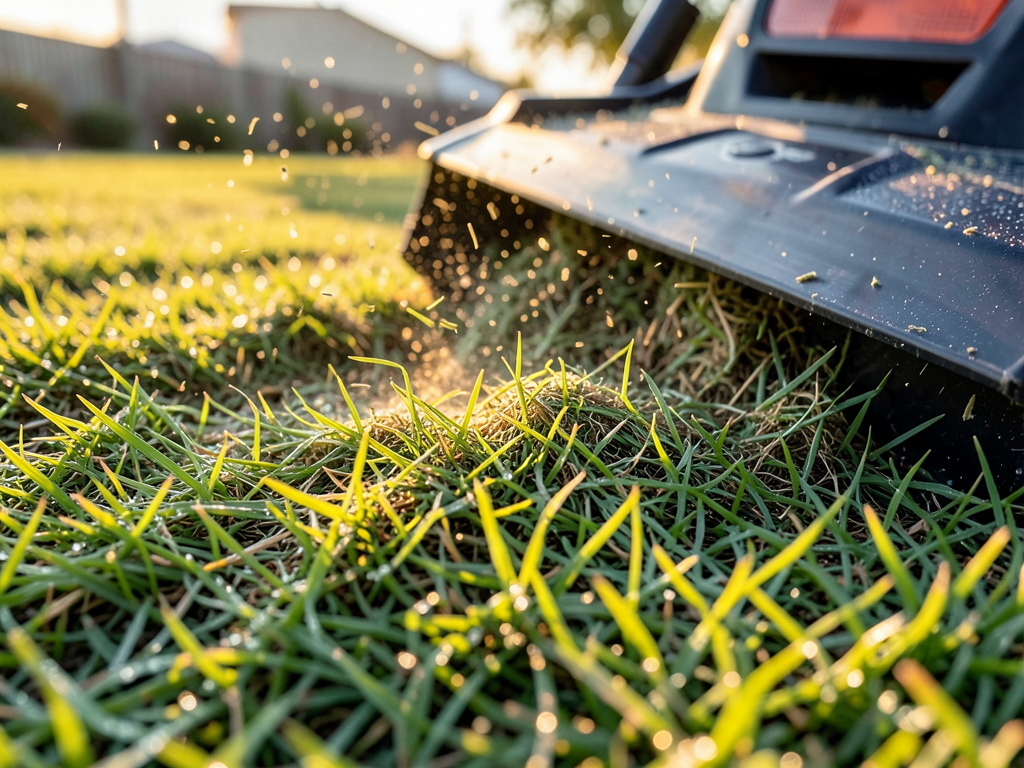
Beyond mowing, core aeration is often the unsung hero of spring lawn revival. Our clay-heavy soils compact easily, suffocating roots. Aeration— pulling small plugs of soil from the lawn—allows water, air, and fertilizer to penetrate deeply. This single service dramatically improves water uptake and seed germination if you’re overseeding bare spots. It’s a foundational practice that turns struggling turf into resilient carpet.
What’s the best lawn mowing schedule for Yuba City’s growing season?
Once growth begins in earnest, usually by mid-March, you should plan on mowing weekly. Bermuda grass can require mowing every 5-7 days during peak growth in May and June. Fescue, being a cool-season grass, has its peak in spring and fall, but still needs consistent weekly mowing to maintain ideal height. The frequency depends on the “one-third rule”—if the grass grows 3 inches and your target is 2 inches, you must mow when it reaches about 2.5 inches. Mowing wet grass is another pitfall; it clumps and creates an uneven cut. A professional lawn care schedule takes these variables out of your hands.
Taming the Jungle: Shrub and Hedge Trimming That Promotes Health
That riot of growth isn’t just unsightly; it’s a structural and health risk. Overgrown branches rub against your home’s siding, trap moisture, and provide highways for pests. Incorrect pruning, however, can be worse than no pruning. “Topping” trees and shearing shrubs into boxy shapes creates dense, weak growth that breaks easily and never fills in properly. The goal is selective thinning and shaping that mirrors the plant’s natural form.
For flowering shrubs, timing is everything. Spring-bloomers like camellias and forsythia should be pruned immediately after they finish flowering. Pruning them in fall or winter removes next year’s buds. For summer-bloomers like roses and hydrangeas (certain types), late winter or early spring is the window. But what about the evergreen hedges defining your property line? They need a light shaping in late spring after their initial flush of growth to maintain density without revealing bare wood. A professional handyman with horticultural knowledge knows these distinctions. They use the right tools—pruning shears for detail, loppers for thicker branches, and saws for large limbs—and make clean cuts just outside the branch collar to promote rapid healing.
This service directly links to pest prevention. Thick, matted interiors harbor spiders and rodents. Removing that inner growth improves air circulation, reducing fungal diseases like powdery mildew that love our humid valley evenings. It instantly improves your home’s curb appeal and safety. It’s one of the highest-impact yard improvements you can make.
Can overgrown shrubs damage my home’s foundation or siding?
Yes, in multiple ways. Shrubs planted too close can retain moisture against your foundation, contributing to soil expansion and potential cracking. Their branches can abrade siding, scratch paint, and hold leaves and debris directly against surfaces, accelerating wear and creating rot zones. Furthermore, dense growth near the foundation provides hiding and nesting spots for insects and small rodents that may eventually find an entry point. Keeping a clear zone of 12-18 inches around your home’s perimeter is a critical defensive landscaping practice.
The Stump Problem: Why Grinding Is the Only Real Solution
That old stump is more than an eyesore. It’s a persistent obstacle. It prevents you from using that corner of the yard, complicates mowing (you’ll inevitably ding your mower deck), and serves as a natural nursery for fungi, insects like termites and carpenter ants, and new, unwanted sapling growth. Pulling it is expensive and disruptive. Chemical treatments take years and can leach into soil. The definitive, professional answer is stump grinding.
This isn’t a DIY job with a rented machine from the big-box store. Professional stump grinding uses a powerful, maneuverable machine with a rotating cutting wheel that grinds the stump and major roots down to a depth of 6-12 inches below grade. The result is a pile of nutrient-rich wood chips (mulch!) that can be spread in the hole or removed. Within weeks, that space is flat, usable, and ready for grass seed, sod, or a new landscaping feature. It reclaims square footage, eliminates a tripping hazard, and removes a major pest attractant. When you schedule stump grinding as part of your spring landscaping overhaul, you’re not just removing a problem—you’re unlocking the full potential of your entire property.
How long after stump grinding can I plant grass or new shrubs?
You can plant directly into the grindings and soil mix almost immediately for grass seed or sod. The wood chips will decompose and enrich the soil. For new shrubs or trees, it’s best to wait a few weeks to allow the soil to settle and the mulch to begin breaking down. You may need to add some fresh topsoil to the depression to create a level planting bed. Your handyman can advise on the specific needs based on what you wish to plant.
Beyond the Greenery: Strategic Junk & Debris Removal for a True Clean Slate
Before any real lawn care or landscaping begins, you must clear the stage. This means the pile of old fence posts, the broken patio furniture, the bags of leaves you never got around to, the construction debris from a years-ago project. A spring cleanout isn’t just about aesthetics; it’s about safety and efficiency. Rodents and snakes nest in debris piles. Tripping hazards abound. More importantly, every piece of junk you move yourself means less time and energy for the actual restorative work.
This is where a full-service handyman services provider shines. They don’t just haul; they categorize. Green waste (branches, leaves) goes to a different facility than general trash. recyclables are separated. They load, transport, and dispose of everything ethically. For larger items like old concrete chunks or dilapidated sheds, they have the means to dismantle and remove them. This service is the essential first chapter in your yard’s comeback story. It transforms a cluttered, daunting space into a blank canvas ready for mowing, trimming, and planting. Viewing it as a “spring cleanout” aligns it perfectly with the seasonal drive and makes it a logical, necessary step rather than an afterthought.
What can a handyman remove that I can’t easily dispose of myself?
A professional has the licensing, insurance, and equipment to remove items prohibited or difficult for curb-side pickup. This includes large volumes of yard waste (a whole tree’s worth of branches), old tires, broken concrete, asbestos-containing materials (like old siding, with proper handling), non-CRT electronic waste, and large furniture. They also handle the heavy lifting and safe transport, preventing injury and ensuring materials go to the correct recycling or landfill facilities, which saves you from potential fines.
The Yuba City Homeowner’s Action Plan
Don’t try to solve all four problems in one exhausting weekend. The tactical approach is sequential. First, conduct a full debris and junk removal to clear the area. Second, address any large, obstructive stumps through grinding. Third, perform a comprehensive pruning and trimming of all shrubs, trees, and hedges. Finally, establish a rigorous, weekly mowing and edging schedule that begins now and continues through October. This sequence respects the physical workflow—you can’t mow effectively if you’re dodging branches and stumps.
Each of these steps interconnects. Removing the stump allows for that corner to be seeded, which requires proper mowing etiquette to establish. Pruning opens the yard, making mowing patterns more efficient and reducing the debris load. A clean yard highlights exactly where your lawn needs attention. This is where a single, reliable handyman Yuba City provider becomes invaluable. They manage the sequence, provide the right equipment for each specialized task, and offer the consistency of a weekly mowing schedule you can count on. They become the orchestrator of your property’s health.
Frequently Asked Questions (Yuba City & Marysville Focus)
How much does professional lawn mowing cost for an average yard in Yuba City?
For a typical 5,000-7,000 square foot residential lot, weekly mowing, edging, and blowing typically ranges from $40 to $70 per visit, depending on obstacles (trees, flower beds, slopes) and frequency. This is for a basic service. Many reputable companies offer seasonal contracts that provide a slight discount and guarantee priority service during the peak growth months of April, May, and June. This price is competitive with the time, fuel, and equipment maintenance you’d invest yourself, and it returns hours of your weekends.
Are there any local regulations in Yuba City or Marysville about yard waste or debris?
Yes, both cities have specific collection rules for green waste. Typically, it must be placed in designated green waste cans or bundled and tied for weekly pickup. There are often volume limits per week and strict prohibitions against depositing debris in gutters or storm drains. Burning yard waste is generally prohibited within city limits. A professional handyman service stays current on these municipal codes and will ensure all disposal is compliant, saving you from potential citations. They also handle the volume that exceeds city pickup limits.
What’s the difference between your stump grinding and just cutting the stump low?
Cutting a stump low to the ground merely creates a trip hazard and a decaying log. Grinding uses industrial machinery to mechanically pulverize the stump and the majority of its root crown into a wood-chip mulch below the soil surface. This removes the biological engine that causes new sprouting and eliminates the physical mass. The ground-down area can be filled and leveled, completely erasing the stump’s presence. Cutting it low leaves the entire root system intact, which will continue to send up shoots for years.
This spring, stop looking at your yard as a list of overwhelming chores. Reframe it as a series of strategic interventions. The journey from a Sacramento Valley desertscape to a functional, beautiful property begins with one call. A local expert in handyman Yuba City can assess your unique situation, execute these core services in the correct order, and set you up with a sustainable maintenance plan. The April 50% off special on weekly mowing seasonal accounts is your gateway to that consistency. Let’s get your yard working for you, not against you.
Sovereign Alfred
(530) 978-8081